 By
By Fire safety can slip down the priority list when a business is focused on staffing, customers, stock, and day to day costs. The trouble is that fire risks rarely announce themselves in obvious ways. They tend to build quietly through blocked exits, poor storage, ageing equipment, or changes to how a building is used. That is why a proper fire risk assessment in Scotland is such a sensible part of responsible premises management.
For many businesses, the value of a review is not just about paperwork. It is about understanding how people would get out, what could go wrong, and whether existing precautions still make sense for the building as it stands today.
Fire risk changes as soon as a building starts changing
A building may have been safe when it first opened, but that does not mean the same controls still fit a year later. Layouts change. Storerooms become fuller. Extra sockets get added. Staff numbers increase. A quiet office unit might begin handling deliveries, contractors, or members of the public far more often than it once did.
These changes affect fire safety in practical ways. Escape routes that once felt generous can become cluttered. Fire doors may be propped open for convenience. Equipment can generate more heat than expected. Even something as simple as moving furniture can reduce visibility or slow people down during an evacuation.
A review helps bring these details back into focus. It looks at the real use of the space rather than the assumptions people may still be working from.
Different premises carry different types of risk
Not every workplace faces the same issues. A small office, a warehouse, a retail unit, and a guest accommodation property all have very different day to day fire risks. That matters because a sensible safety approach should match the environment rather than rely on a generic checklist.
In hospitality settings, kitchens, linen storage, and guest familiarity with the building all come into play. In industrial premises, ignition sources, machinery, flammable materials, and shift patterns may be more relevant. In shared buildings, there is also the added question of how one occupier’s risks affect another.
Older properties can present another layer of complexity. Compartmentation, access routes, and historic alterations may all affect how a fire would spread and how easily people could get clear. A realistic assessment takes these details seriously instead of treating every site as if it operates in the same way.
Staff behaviour often matters as much as the building itself
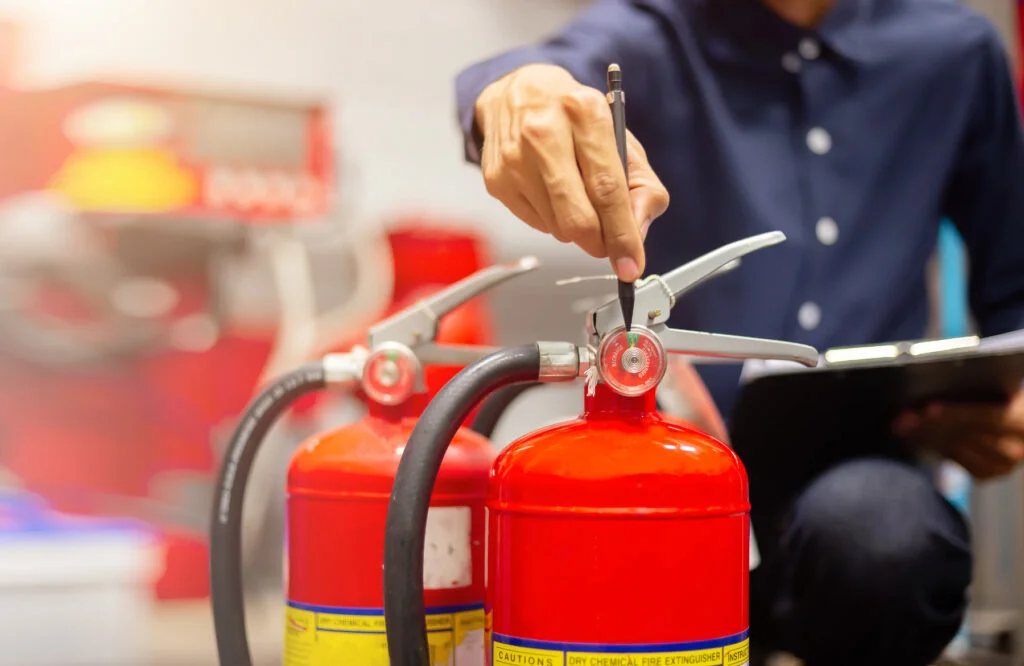
It is easy to think of fire safety as something fixed, alarms, extinguishers, signage, and emergency lighting. Those things matter, but human behaviour is just as important. A well equipped building can still be unsafe if basic routines are poor.
This is where many issues start. Fire exits get used for storage. Internal doors are wedged open. Staff assume someone else checks the alarm panel. New starters may not know the evacuation point or what to do if they discover smoke. In some workplaces, drills are treated as a formality rather than a test of whether procedures actually work.
A good review highlights these operational gaps. It can show whether fire precautions are being supported by training, supervision, and clear responsibilities. That is often where the most useful improvements come from, not dramatic changes, but better habits.
Reviews help businesses spot problems before they become serious
One of the strongest reasons to take fire safety seriously is that small failings can become major issues when ignored. A damaged fire door, an overloaded extension lead, or a poorly maintained detector may not seem urgent at first glance. Under real pressure, though, those details matter.
A structured review allows issues to be picked up while they are still manageable. It also helps businesses prioritise what actually needs attention. Not every point carries the same level of urgency, and having a clearer view can stop people either overreacting or doing too little.
That makes planning easier. Budgets can be allocated properly, responsibilities can be assigned, and actions can be taken in a sensible order. For owners, managers, and duty holders, that clarity is often one of the biggest benefits.
Good fire safety is part of good building management
Fire safety should not be treated as a one off exercise that sits in a folder and goes unread. It works best when it forms part of wider building management, alongside maintenance, health and safety, and general operational planning.
When businesses review their premises properly, they tend to make better decisions about layout, storage, staffing, maintenance, and emergency preparation. The result is not just a safer building on paper, but a building that functions more safely in real life.
That is why regular fire safety reviews matter. They help turn assumptions into evidence, highlight what needs attention, and keep people safer in the places where they work, visit, or stay.